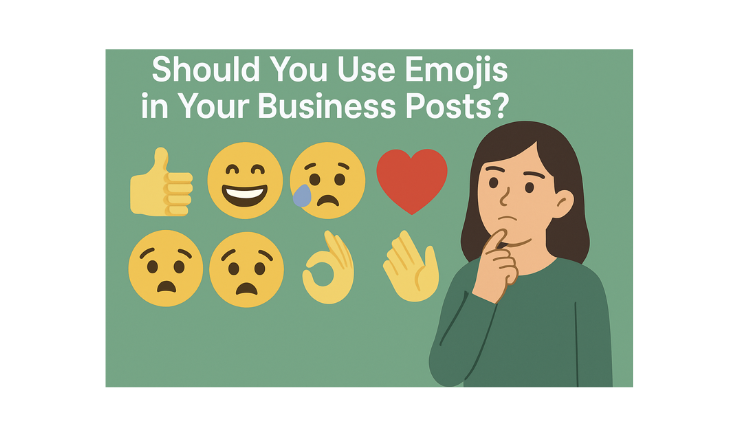
Should You Use Emojis in Your Business Posts? Pros, Pitfalls & Best Practices
The Rise of Emojis in Digital Communication
In today’s world of rapid scrolling and instant reactions, emojis have become the shorthand of digital emotion. From casual chats to formal emails, emojis have found a way into nearly every form of communication—even in business.
According to a 2023 HubSpot study, posts with emojis on platforms like Instagram and Twitter see up to 33% higher engagement. Even in B2B communication, emojis are making a surprising impact, especially in marketing, customer service, and social media.“At Help Me Buddy IT Pvt Ltd, we help businesses create engaging social media strategies — Explore our Digital Marketing Services.”
So, the question is no longer “Are emojis appropriate?” but rather: When and how should you use them effectively?
Pros of Using Emojis in Business Posts
Using emojis the right way can enhance your content in powerful ways:
- Boosts Engagement
Visual cues like emojis can draw the eye, especially on crowded feeds. Posts with emojis can:
- Increase likes, shares, and comments
- Encourage user interaction
- Stand out in email subject lines
- Makes Messages Visually Appealing
A few strategically placed emojis can break up long text, making it more skimmable and friendly.
- Humanizes the Brand
Adding a 😊 or 👋 can soften your tone and make your brand feel more approachable—something especially important in customer support and brand storytelling.
Cons of Using Emojis in Business Communication
As effective as emojis can be, they come with risks:
- Misinterpretation
What means “cheerful” to one person might feel sarcastic or inappropriate to another.
- Overuse Risks
Going overboard can dilute your message or make it look childish. Less is often more.
- Cultural Differences
Not all emojis translate well across cultures. A thumbs-up 👍 might be friendly in the U.S. but offensive in other countries.
When Emojis Work Well in Business Contexts
While not all business scenarios call for emojis, they shine in specific use cases:
- Social Media Posts: Emojis help express tone, add flair, and catch attention.
- Email Marketing: Emojis in subject lines can improve open rates—especially in casual or B2C campaigns.
- Internal Communication: Slack, Teams, or even company newsletters can use emojis to lighten the mood.
When to Avoid Emojis in Professional Content
There are times when emojis are better left out:
- Legal or HR Content: Documents involving legal compliance, performance reviews, or sensitive matters should remain formal.
- Formal Reports & Proposals: For board-level presentations or government documents, emojis can hurt credibility.
- Industry-Specific Standards: Medical, legal, and financial fields often require a professional tone.
Audience Matters: Understanding Demographics
Understanding your audience is key:
| Age Group | Emoji Reception |
| Gen Z (18–24) | Loves emojis, even unconventional or ironic use |
| Millennials (25–40) | Comfortable with casual emoji use in content |
| Gen X (41–56) | Appreciates subtle emoji usage in emails and posts |
| Boomers (57+) | May view emojis as unprofessional or distracting |
Always tailor your tone and emoji use to fit your target audience.
Platform-Specific Emoji Performance
Each platform has its own emoji “etiquette”:
- LinkedIn: Use sparingly—maybe a bullet-style emoji (✅) for emphasis.
- Instagram & Twitter/X: Emojis thrive here. Use them to set the mood or highlight points.
- Facebook: Great for playful, emotional storytelling.
- YouTube Titles & Comments: Can make videos stand out on crowded lists.
Emoji Psychology: Why They Increase Engagement
Why do emojis work so well?
- Visual Stimulation: Emojis break up visual monotony.
- Emotional Triggers: A heart ❤️ or clapping hands 👏 immediately evokes feeling.
- Pattern Interrupts: They catch the eye as people scroll, stopping them momentarily.
This makes emojis a subtle but powerful tool for engagement.
Choosing the Right Emoji for Your Message
Picking the perfect emoji isn’t just about cuteness—it’s about clarity.
- ✅ Use emojis that directly support your message.
- 🧠 Avoid emojis that could have multiple interpretations.
- 💡 Stay on-brand: A law firm might use ✅, 📌, or 📄—but avoid 🐵 or 😂.
The Do’s and Don’ts of Business Emoji Usage
✅ Do’s
- Use emojis that match your brand’s tone
- Keep emoji count under 3 per message for professionalism
- Use emojis as visual accents, not message replacements
❌ Don’ts
- Don’t use emojis in serious or sensitive messages
- Don’t assume all emojis are universally understood
- Don’t mix emojis from conflicting emotional tones
Emojis and Branding: Keep It Consistent
Your emoji usage should reflect your brand’s identity.
Create an internal emoji guideline for your content team:
- Which emojis are approved?
- How often should they be used?
- What tone should they reflect?
Brand consistency builds trust—and emojis are no exception.
A/B Testing Emojis in Campaigns
Want to see if emojis work for your brand? Test them!
- Subject Lines: Try one version with an emoji and one without.
- Social Captions: Measure engagement metrics like CTR or comments.
- Paid Ads: Emojis in headlines can affect performance.
Case Example:
A fitness app tested “Try This 10-Min Workout 💪” vs “Try This 10-Min Workout.”
The version with the emoji had 18% more clicks.
Case Studies: Brands Using Emojis Successfully
Slack
Known for its friendly tone, Slack uses emojis in blog posts, product updates, and UI messages—keeping communication light and clear.
Domino’s Pizza
Let customers order with just a 🍕 emoji on Twitter—brilliant, viral, and brand-consistent.
Zapier
A B2B SaaS brand that uses subtle emojis (🛠️, 🔗) in LinkedIn posts for improved readability and relatability.
Tools for Emoji Integration and Planning
| Tool | Purpose |
| Emojipedia | Emoji meanings, history, Unicode reference |
| Buffer/Hootsuite | Schedule emoji-rich posts for all platforms |
| Twemoji | Twitter’s open-source emoji visual library |
| Copy.ai | Emojis + caption generator for social content |
These tools help plan and deploy emoji strategy more professionally.
FAQs About Using Emojis in Business Content
- Are emojis unprofessional in business communication?
Not necessarily. When used with purpose and in the right context, they can enhance clarity and engagement.
- Do emojis affect email open rates?
Yes! Emojis in subject lines can improve open rates—especially in B2C or lifestyle emails.
- Can I use emojis on LinkedIn?
Yes, but sparingly. Stick to 1–2 per post and keep the tone business-appropriate.
- How many emojis is too many?
More than 3 in a single line or sentence can feel overwhelming or juvenile.
- Are emojis searchable in SEO or social search?
In some cases, yes. Emojis can act as keyword triggers, especially on Instagram and TikTok.
- Are all emojis safe to use?
No. Some emojis have multiple meanings or cultural variations. Always check on Emojipedia if unsure.Want to craft social media posts that connect with your audience? Discover our full range of services at Help Me Buddy IT Pvt Ltd.”