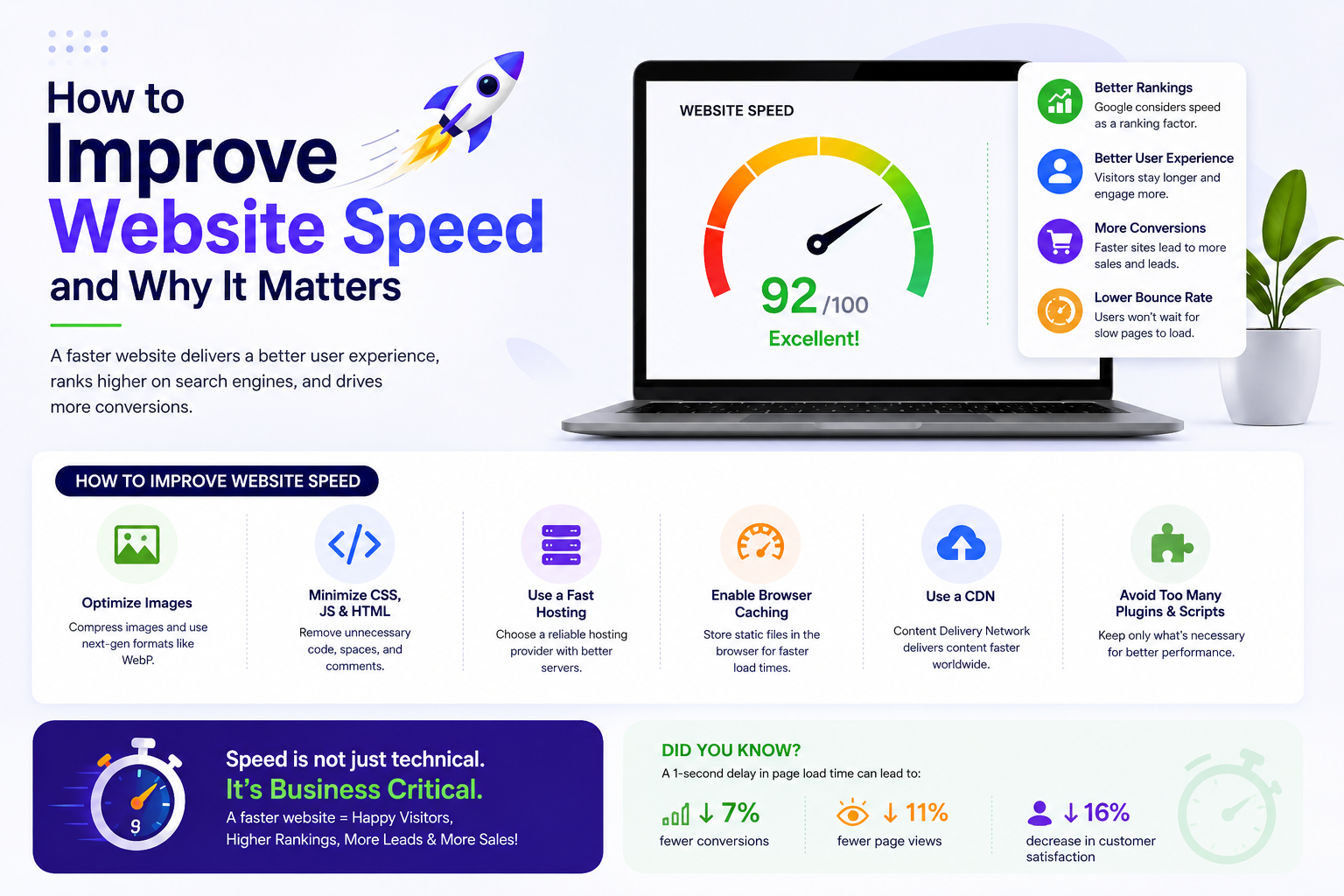
How to Improve Website Speed and Why It Matters
In today’s digital world, speed isn’t just a convenience—it’s a competitive advantage. Whether you’re running a business website, an eCommerce store, or a professional portfolio, visitors expect your website to load almost instantly. If it takes too long, many users will leave before they even see your content.
Website speed affects everything from user experience and search engine rankings to lead generation and sales. A slow website can increase bounce rates, reduce customer trust, and negatively impact your online growth.
At Help Me Buddy, we help businesses build fast, secure, and SEO-optimized websites that deliver exceptional performance across desktops, tablets, and mobile devices. If your website feels slow, this guide will show you why speed matters and how to improve it.
👉 Explore our website optimization services: https://helpmebuddy.in/
Blog Outline
1. Introduction
· Why website speed matters
· How loading time affects business growth
· The connection between speed, SEO, and user experience
2. What Affects Website Speed?
· Hosting quality
· Image optimization
· Code efficiency
· Plugins and scripts
· Caching
3. SEO Impact of Website Speed
· Search engine rankings
· Core Web Vitals
· Crawl efficiency
· Mobile performance
4. User Experience Benefits
· Lower bounce rates
· Higher engagement
· Better conversions
· Customer satisfaction
5. Website Speed Optimization Techniques
· Compress images
· Minify CSS & JavaScript
· Browser caching
· CDN implementation
· Database optimization
· Mobile optimization
Why Website Speed Matters
Your website is often the first interaction customers have with your business. If visitors experience delays, they may leave before exploring your products or services.
A fast website helps you:
· Improve customer satisfaction
· Increase search engine visibility
· Generate more leads
· Reduce bounce rates
· Boost online sales
· Strengthen brand credibility
Speed is no longer a luxury—it’s an essential part of a successful online presence.
1. Key Factors That Affect Website Speed
Several technical and design elements influence how quickly your website loads.
Quality Web Hosting
Reliable hosting provides faster server response times and better overall performance. Choosing the right hosting provider is the foundation of a high-performing website.
Large Image Files
Uploading uncompressed, high-resolution images can significantly slow down your pages.
Optimize images by:
· Compressing file sizes
· Using modern image formats where appropriate
· Serving responsive image sizes
· Adding descriptive alt text for accessibility and SEO
Excessive Plugins and Scripts
Too many plugins or unnecessary third-party scripts increase loading times and may introduce security risks.
Regularly audit your website to remove anything you no longer use.
Poorly Optimized Code
Clean, efficient HTML, CSS, and JavaScript improve page performance and reduce unnecessary processing.
Lack of Caching
Browser caching allows returning visitors to load pages much faster by storing frequently used website resources.
2. How Website Speed Impacts SEO
Search engines prioritize websites that provide excellent user experiences, and page speed is one of the important performance signals.
Better Search Rankings
Fast websites are more likely to perform well in search results because they deliver content quickly and efficiently.
Improved Core Web Vitals
Optimizing loading speed, responsiveness, and visual stability supports better Core Web Vitals performance, which contributes to a healthier website experience.
Faster Crawling and Indexing
Efficient websites allow search engines to crawl more pages in less time, improving content discovery.
Mobile SEO Benefits
Since many users browse on smartphones, fast-loading mobile pages are essential for both rankings and user satisfaction.
3. Website Speed Improves User Experience
A fast website keeps visitors engaged and encourages them to explore more pages.
Benefits include:
Lower Bounce Rates
Visitors are less likely to leave if pages load quickly.
Higher Engagement
Users spend more time browsing products, services, and blog content when navigation feels smooth.
Better Conversion Rates
Whether your goal is generating leads, selling products, or booking appointments, faster websites remove friction from the customer journey.
Greater Customer Trust
Professional performance creates confidence and reflects positively on your business.
4. Effective Website Speed Optimization Techniques
Improving website speed requires a combination of technical best practices.
Compress and Optimize Images
Reduce image file sizes while maintaining visual quality to decrease page load times.
Minify CSS, JavaScript, and HTML
Remove unnecessary characters and code to make files smaller and quicker to download.
Enable Browser Caching
Allow browsers to store static resources so returning visitors experience faster loading speeds.
Use a Content Delivery Network (CDN)
A CDN distributes your website content across multiple servers, reducing loading times for visitors in different geographic locations.
Optimize Your Database
Regularly clean unnecessary data, revisions, and unused records to keep your website efficient.
Improve Mobile Performance
Ensure your website is responsive, lightweight, and optimized for users on smartphones and tablets.
Reduce Redirects
Limit unnecessary redirects that increase loading time and delay page rendering.
Regularly Monitor Performance
Use trusted performance tools to identify bottlenecks and prioritize ongoing improvements.
Common Website Speed Mistakes to Avoid
Many businesses unintentionally slow down their websites by:
· Uploading oversized images
· Installing too many plugins
· Using low-quality hosting
· Ignoring software updates
· Embedding unnecessary third-party scripts
· Failing to optimize for mobile devices
· Not enabling caching
· Neglecting routine maintenance
Avoiding these issues helps maintain a fast, reliable, and user-friendly website.
Why Choose Help Me Buddy?
At Help Me Buddy, we optimize websites to deliver exceptional speed, stronger SEO performance, and better user experiences.
Our services include:
· Website Speed Optimization
· Website Development
· WordPress Optimization
· Technical SEO
· Mobile Optimization
· Core Web Vitals Improvements
· Website Maintenance
· Performance Monitoring
· Security Enhancements
· Digital Marketing Solutions
Every website we optimize is designed to perform efficiently while supporting long-term business growth.
👉 Learn more about our services: https://helpmebuddy.in/
Final Thoughts
Website speed has become one of the most important factors influencing online success. A fast website improves customer satisfaction, supports better search engine rankings, increases conversions, and strengthens your brand’s credibility.
By understanding what affects website performance and implementing proven optimization techniques, businesses can create faster, more reliable websites that deliver better results for both users and search engines.
Regular performance monitoring and maintenance ensure your website continues to meet modern expectations as technology evolves.
Get a Website Performance Audit
Is your website loading slower than it should?
Help Me Buddy provides comprehensive website performance audits and optimization services to help businesses improve speed, user experience, and search engine visibility.
Why Work with Help Me Buddy?
✔ Website Speed Optimization
✔ Core Web Vitals Improvements
✔ Technical SEO Expertise
✔ Mobile Performance Optimization
✔ WordPress Performance Tuning
✔ Ongoing Website Maintenance
✔ Detailed Performance Reports
👉 Schedule your website performance audit today: https://helpmebuddy.in/
Let’s make your website faster, more efficient, and ready to convert more visitors into customers.
Frequently Asked Questions (FAQs)
1. Why is website speed important?
Website speed directly affects user experience, search engine rankings, customer satisfaction, and conversion rates. Faster websites keep visitors engaged and improve overall business performance.
2. Does website speed affect SEO?
Yes. Search engines consider page performance as part of the overall user experience. Faster websites are more likely to rank well and provide better experiences for visitors.
3. What are the most common causes of slow websites?
Common causes include oversized images, poor hosting, excessive plugins, unoptimized code, too many third-party scripts, lack of caching, and outdated software.
4. How can I improve my website’s loading speed?
Compress images, optimize code, enable browser caching, use a Content Delivery Network (CDN), improve hosting quality, reduce unnecessary plugins, and regularly monitor website performance.
5. Why should my website be mobile-friendly?
Most users browse websites on mobile devices. A mobile-friendly website loads efficiently, offers better usability, supports stronger SEO performance, and improves customer engagement across different screen sizes.
6. How often should I perform a website performance audit?
It’s recommended to review your website’s performance regularly, especially after major updates, redesigns, plugin installations, or changes to your hosting environment, to ensure optimal speed and reliability.
Comments
Share your thoughts about this post.